Learn through play
“Play provides opportunities for children to learn as they discover, create, improvise and imagine. Play provides a supportive environment where children can ask questions, solve problems and engage in critical thinking. Play can expand children’s thinking and enhance their desire to know and to learn (Early Years Learning Framework, 2009 p. 15)”.
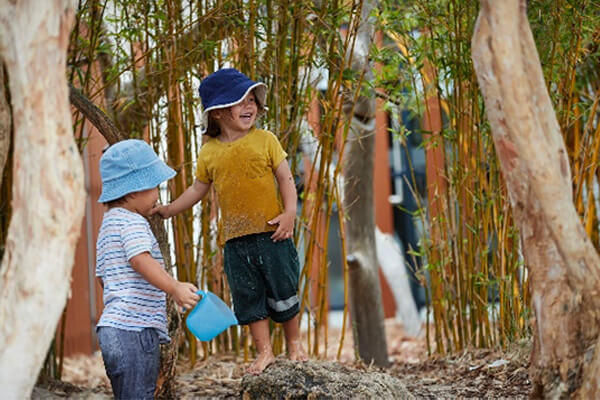
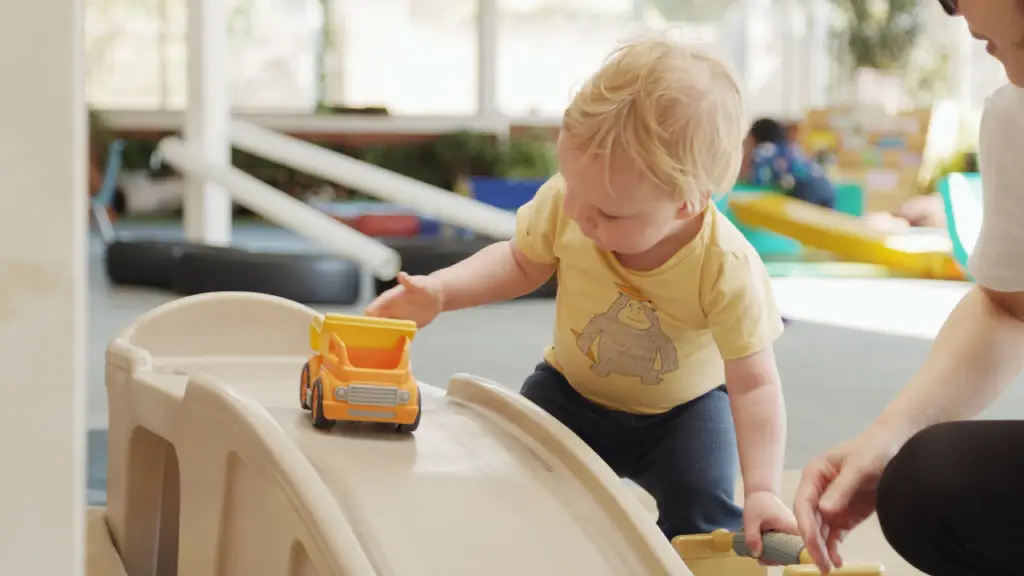
Play comes naturally to children and is important to their learning and development, as well as their sense of identity, studies around the world have shown that children learn and develop while they are involved in purposeful play based experiences.
Play takes many forms, occurs in a range of settings, indoor and outdoor, can involve one or more people, can be active or passive, has specific meaning and value to those participating in it.
Play involves thinking and above all, is rewarding and fun!
At Ngala we plan our play environments by noticing each child’s interest and curiosity and provide resources to consolidate and extend their learning and development. We believe play should be fun and joyful and we are sensitive to each child’s play.
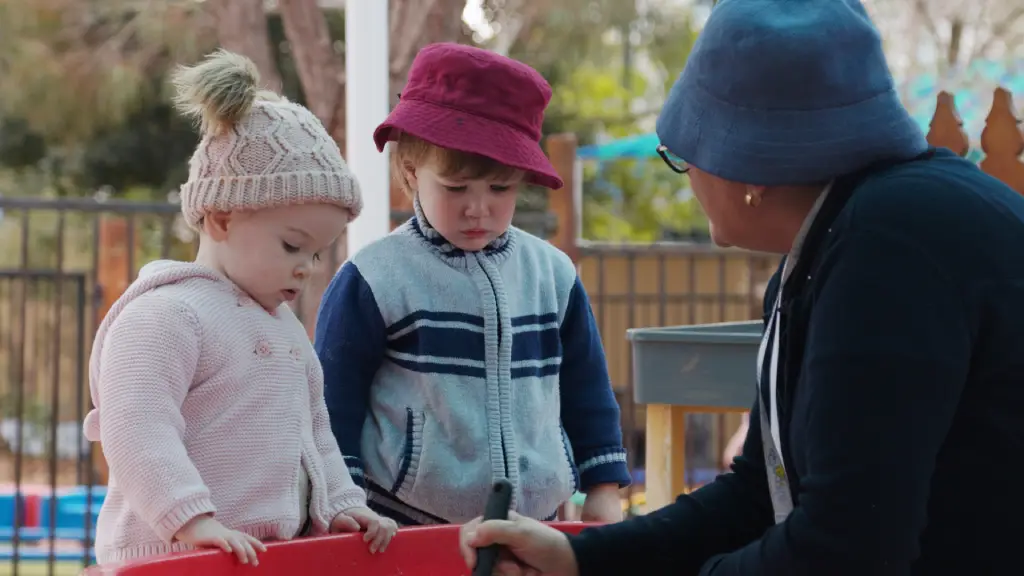
We provide large segments of uninterrupted time for each child to be able to experiment, practice and master skills that they are interested in learning. Children are active learners, so we set up play experiences and environments that enable them to be actively learning, whilst having educators close by to encourage, build on their strengths, talk through challenges and risks, celebrate successes and intentionally teach skills, if that is needed.
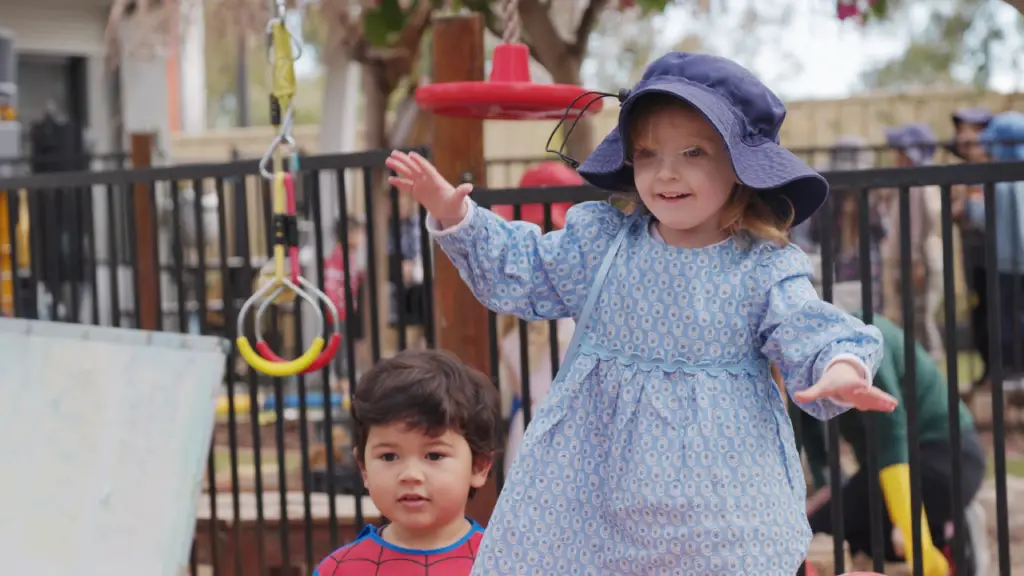
At Ngala Early Learning and Development Service we support child led play. Each child can move freely between the indoor and outdoor play spaces, make decisions about where to play, who they will play with and how long they will spend at a particular activity, while Educators provide teaching, support and guidance when children need help.
Wherever and however children decide to play, there are expectations and our educators assist each child to learn behaviours that will be acceptable to others. This ensures each child feels safe and secure, shows respect for each other and the service, and supports fairness and equity.
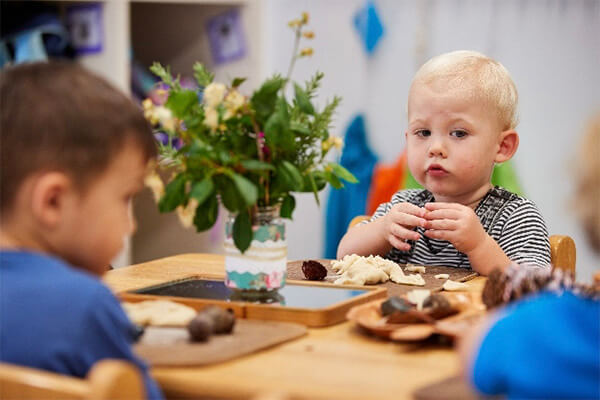
Along with our carefully planned play environments for small group play, each child has an opportunity to be involved at their leisure and participation level. We do offer large group opportunities such as Storytelling, Music and Community Time, where all children are invited to the session, but have the right to say no and continue with play of their choice. This is called ‘Free Flow Play’.
The following is an abridged extract from Tina Bruce’s 1991 book ‘Time to Play in Early Childhood Education’:
Features of Free Flow Play:
- Play is an active process without a product
- Play is intrinsically motivated
- Play exerts no pressure to conform to rules, goals and tasks or to take definite directions
- It is about possible, alternate worlds which involve the concepts ‘supporting’ and ‘as if’ and which lift the player to the highest levels of functioning. This involves being imaginative, creative, original and innovative
- Play is about participants wallowing in ideas, feelings and relationships, and becoming aware of what we know (metacognition)
- It actively uses first hand experiences
- It is sustained, and when in full flow, helps us to function in advance of what we can actually do in our real lives
- In play we use technical prowess, mastery and competence, that we have previously developed. We are in control
- Children or adults can initiate play but each must be sensitive to each other’s personal agenda
- Play can be solitary
- It can be with others each of who is sensitive to fellow players
- Play integrates everything we learn, know, feel, relate to and understand
Play Opportunities are Learning Opportunities
Where you might see children playing with playdough, we see opportunities to strengthen fine motor skills (essential for holding pencils and writing), maths (cutting and counting pieces) and social skills being built (sharing rolling pins or cutters).
Where you might see children getting messy during mud play, we see opportunities to test theories in science and maths (thick, runny, liquid, solid, soft, dry, slimy, slippery, counting and positioning) and physical activity such as balance and co-ordination.
Where you might see children building with blocks, we see opportunities for hand eye co-ordination, maths skills such as size, shape, positioning, patterns, counting, adding and sorting.
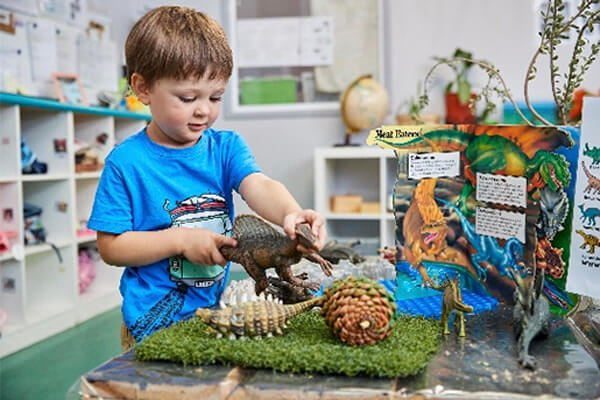
Where you might see children making a cubby house we see opportunities for planning and problem solving, negotiation, teamwork and spatial awareness.
Learning through play allows children to learn at their own pace, through curiosity and joy and gain the confidence, knowledge and skills needed to attempt the more complex concepts and tasks. When children move from the early childhood setting to primary school they will gradually move from play based active learning to a more formal instructional model of learning, which becomes more appropriate as they get older, with increasing attention skills.